4 tips for using history content to build trust with audiences
Jan Ross P. Sakian, American Press Institute,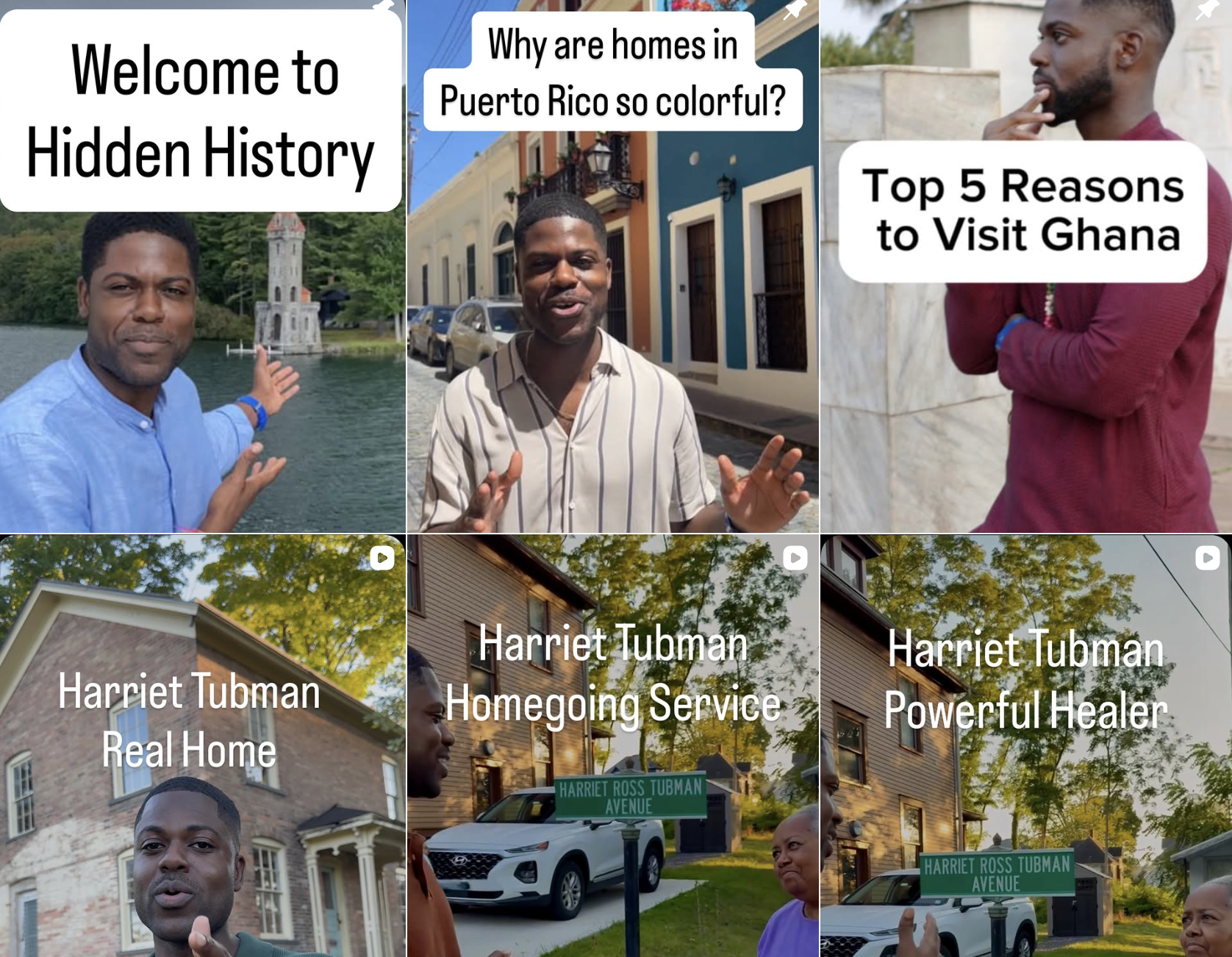
Kwasi Hope is a historian, speaker and video creator with followings on TikTok and Instagram. He partners with organizations to highlight people and places of local historical significance. (Kwasi Hope/Instagram)
Here’s an idea to steal and adapt: Plan a sustainable strategy for social content with collaborators.These insights were shared during a live Q&A session hosted by API senior vice president Samantha Ragland in February 2026. You can view the video recording here.
This public “Ask Me Anything” session was a collaboration between API and the Syracuse University Institute for Democracy, Journalism & Citizenship following IDJC’s sponsorship of the API Local News Summit on Inclusion, Belonging and Local Leadership in 2025.
More on creator collaborations:
For many Americans, current events can lead to feelings of news fatigue or overwhelm. However, we still look for ways to learn more about where we live and what makes the places special to us unique. Short-form video can help make those community connections.
Historian Kwasi Hope interacts with journalists, museum professionals, local officials and community members on his travels and work as an independent creator. He shares what he learns about people and places of historical significance through short-form videos, which have 6 million views across Instagram and TikTok combined.
In a February 2026 “Ask Me Anything” session, Hope joined Samantha Ragland, the American Press Institute’s senior vice president, to answer questions from news leaders about how local media and independent creators can work together to spotlight local history. They also shared these practical tips for navigating partnerships with creators:
Build trust through good journalism practices
Hope leans on two journalism principles when approaching local history organizations as sources or potential collaborators:
- Take a step back, then present information
- Cite information along with sources
“When I reach out to local partners and when I do work on that local history aspect, I really go in and say, ‘Hey, can I just tell the story as it is?’” he said.
Hope said that offering historical context while using storytelling to share what’s currently happening on the local level can communicate value and relevance to audiences.
He also thinks it’s important to be sensitive when speaking about local culture and historical events. For example — with support from a local arts agency in Palm Beach County, Fla. — Hope posted about how a park became a mass burial site and eventually a memorial for Black residents who died in the Hurricane of 1928.
Engage in conversation to combat misinformation
For Black History Month, Hope partnered with Cayuga County in upstate New York to feature abolitionist Harriet Tubman’s home in a series of videos. He worked with them to interview descendants of Tubman, who has been the subject of online misinformation questioning her existence.
Hope started conversations with commenters who were curious or had misconceptions about Tubman and her life as a real, complex person, including her personal life and health. For example:
- One viewer commented that she heard Tubman was blind and had narcolepsy
- Hope responded that Tubman had a sleeping disorder but wasn’t blind
- The commenter replied back with a “thank you”
Exchanges like this help to drive engagement on a platform while informing new viewers who read the comments section.
“I don’t always assume people are coming with negativity, even though there’s misinformation, disinformation,” he said. “Always look at it as an opportunity to be empathetic and to educate.”
Make room for relatability in storytelling
By telling stories with relatability in mind, Hope said that local organizations like news media can tap into a wider range of audiences.
According to Hope, these questions are part of the conversation among Gen Z and millennials when they engage with media and seek out trusted messengers:
- Can I have someone who’s on the ground? Someone relatable?
- Can I have someone who can communicate with me in an approachable, personalized experience?
Hope refers to the interest around Harriet Tubman’s love life as an example of using relatability in storytelling. Dating and marriage are common topics on social media, so addressing this part of her personal history can feel relevant, authentic or novel to online audiences.
“How do we engage a new generation? By taking what’s already there but making it relatable. But most importantly, making sure it’s verified,” he said.
Collaborate on strategy
Hope suggests sitting down with local partners to talk about a “sustainable strategy” for the collaboration, even before filming. Discuss how and when to share information. For example, instead of one promotion-forward post, consider a multipart series that encourages audiences to engage over time.
When a large museum in New York City asked Hope to visit and invite people to check out a new exhibition in a video, it led to a learning moment about influence and the power of social media.
“So I’m thinking, I’m just posting this, and maybe a couple of people show up,” he said. “Hundreds of people showed up to the point where the museum was overwhelmed.”
If he were to go back again, Hope would start with a review of the museum first, then share snapshots in other posts about the museum’s offerings or exhibits with cultural significance.
“The third or fourth or fifth post is the post that I say, ‘Hey, now that you’ve heard all this information and you’ve been educated on the matter, this is a great time to come check it out,’” he said.